Home › Custom Drywall and Decorative Features
Superior Drywall New York creates custom drywall in New York, NY, from graceful arches and niches to soffits and tray ceilings. We work with your design ideas to build functional, eye catching features. Elevate your interior with tailored drywall details that stand out.
Superior Drywall New York provides professional custom drywall throughout New York, NY, New York and the surrounding area. Our licensed, insured crew delivers safe, clean, on-time work with a free estimate before anything begins. Call (332) 244-4102 or request your free quote.
Custom Drywall That Fits Your New York Space
Custom drywall is about using standard materials in smarter ways so your apartment, brownstone, or office does exactly what you need it to do. At Superior Drywall New York, we treat every project in New York City as a one-off. A railroad apartment in the East Village needs a different approach than a Chelsea gallery or a Tribeca loft with exposed brick.
When we talk about custom drywall, we are usually shaping or finishing walls and ceilings to create features that are not there now: niches, soffits, dropped ceilings, curved corners, built-ins, or sound-buffering partitions. On-site, we start by checking what is behind the surfaces you already have: plumbing risers, electrical runs, sprinkler lines, and building structural elements. In New York, many buildings have surprises inside the walls, so we open small inspection points first and coordinate with your super if required.
Based on what we find and what you want the space to do, we recommend specific board types, thicknesses, and framing layouts. For example, in a prewar co-op where sound between units is a constant complaint, we may suggest a staggered stud wall with 5/8 inch Type X drywall and sound-damping compound rather than a single layer of 1/2 inch board. If we are building a decorative soffit around ductwork in a SoHo loft, we might use lighter gauge metal framing to keep the profile slim and maintain ceiling height where it matters most.
Every design choice has a reason tied to how you live or work. We ask about things like where you watch TV, where you keep your speakers, how often guests stay over, or what artwork you display. All of that informs where we add blocking, how we lay out seams to avoid cracks, and which corners get metal beads versus flexible trims for curved details.
Decorative Drywall Features: Niches, Soffits, Curves, and More
Decorative drywall features are the details that make a room feel deliberate instead of thrown together. In New York, popular upgrades include recessed TV walls that hide cables, clean-lined soffits that integrate HVAC, and ceiling designs that break up long, narrow rooms.
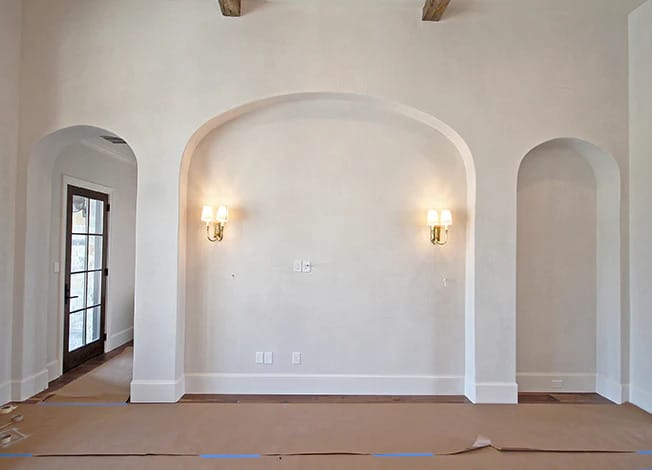
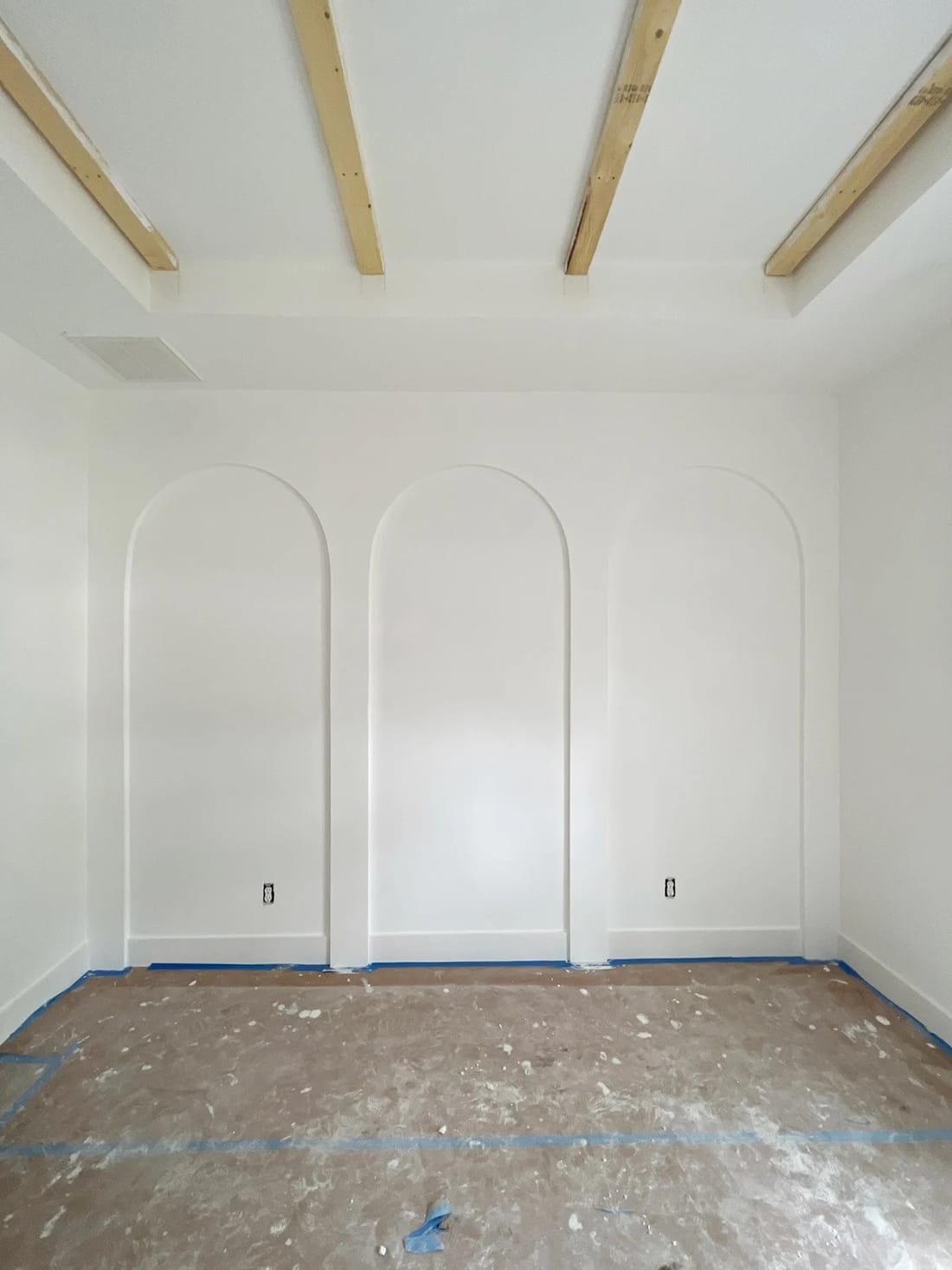
For niches and built-ins, we frame the opening with metal or wood studs, then anchor that framing into existing studs or masonry. We add backing where shelves, TVs, or heavy art will hang. After we install the drywall, we use a combination of metal corner bead and flexible trim around the niche edges so the lines stay sharp and resistant to chipping, especially in high traffic hallways.
For soffits and dropped ceilings, often used in condos and offices along corridors, we first laser-level the room so everything lines up with windows, doors, and existing beams. In many Manhattan apartments, ceilings are not perfectly flat or level. We adjust the framing layout to hide those inconsistencies, so when we are done the new ceiling looks intentional, not like a cover-up. We also plan access panels where valves, junction boxes, or shutoffs need to remain serviceable, and position them in less noticeable locations.
Curved walls or radius corners are done by either kerf-cutting regular drywall or using flexible board, then forming it over curved framing. The key is planning the radius properly. Tight curves require closer stud spacing and more fasteners so the board does not crack later. We skim coat these areas more slowly and often use a separate sanding pass just for the curved surfaces to avoid flat spots that will show under side lighting.
On the finishing side, decorative features usually get upgraded mud work. We use multiple thin coats with wider knives to blend transitions into the existing surfaces. For accent walls that will receive strong grazing light from floor-to-ceiling windows, we recommend at least a level 4 finish and often a near level 5 in high-end spaces to keep seams from telegraphing through the paint.
How We Plan and Build Custom Drywall in New York Apartments and Commercial Spaces
Working in New York is different from working in a standalone house in the suburbs. There are building rules, elevator schedules, neighbors on all sides, and limited storage space. Superior Drywall New York structures each custom drywall project around those realities so the job moves quickly without creating problems for you with building management.
We start with a walk-through and measurements. During that visit we look at ceiling heights, wall conditions, and existing finishes. We note items that can slow a job down in NYC buildings, such as limited freight elevator hours, no wet sanding rules, or strict debris removal windows. We bring those constraints into the plan so we are not caught off guard mid-project.
Next, we produce a simple sketch or use your designer or architect drawings if you have them. For more technical features, like multi-layer sound walls or detailed ceiling coffers, we often create a framing layout with dimensions. This gives you a clear sense of how far a soffit drops, how deep a niche will be, or how much a new partition will narrow a room.
During construction, we schedule deliveries to match the sequence of work instead of flooding your apartment with materials. Framing goes in first, then rough-in for any electrical or low-voltage changes, then insulation for sound or temperature control, then board installation. We screw the board to the framing rather than nail it so joints stay tighter over time, which matters in buildings that vibrate from subway lines or heavy street traffic.
Joint treatment and finishing happen in stages: tape and first coat, then additional coats with drying time in between. In many Manhattan jobs we use fast-setting compounds for earlier coats, especially if the building limits daily working hours, because they cure faster and let us move to sanding and finish coats sooner. We protect floors and built-ins with poly and Ram Board, and we use vacuum-assisted sanders or wet sanding where building rules limit dust.
Costs, Options, and Common Issues With Custom Drywall Work in NYC
The price of custom drywall and decorative features in New York depends mainly on complexity, access, and finish level. A simple straight soffit or a basic new partition will cost less per linear foot than a multi-layer sound-rated wall with integrated lighting and built-in shelving. Tight spaces, walk-ups without elevators, and buildings with limited work windows can also increase labor time and, in turn, costs.
Materials influence price too. Standard 1/2 inch drywall is cheaper than 5/8 inch Type X fire-rated boards, moisture-resistant boards for bathrooms, or specialty sound-damping boards. If we are creating a feature wall where sound is a priority, we might propose a mix of resilient channels, insulation, and damping compound between layers. That combination is more expensive than a single board but is often the most cost-effective way to cut noise from adjacent units.
Finish level is another driver. A basic level 3 or 4 finish is fine for areas with flat light and standard paint. In luxury condos, gallery spaces, or rooms with strong directional lighting, we often recommend an upgraded finish that approaches level 5. That adds one more skim coat over large areas, plus additional sanding, and it shows in the budget and the final look.
Common issues in NYC include uneven original walls, out-of-square corners, and hidden utilities where you did not expect them. Superior Drywall New York handles these by sistering studs to straighten walls, shimming framing so new features line up properly, and working closely with electricians and plumbers when we uncover unplanned runs. If something behind the wall will affect the design or cost, we explain the options and price impact before moving ahead.
For co-ops and condos, approvals can be a factor. Some boards require you to submit scope descriptions, insurance certificates, and sometimes drawings. We are familiar with that process and can supply detailed scope breakdowns for the drywall portion, which can help you clear approvals faster and avoid last-minute delays that keep you from starting work on time.
What New York Property Owners Should Ask Before Hiring for Custom Drywall
Before you hire anyone for custom drywall and decorative features in New York, there are a few questions worth asking to avoid future headaches. First, ask how they will protect neighboring units from noise and dust. An experienced NYC contractor will talk about scheduled noisy work during approved hours, dust barriers, filtered fans, and debris removal plans that match your building rules.
Second, ask to see examples of work that match what you are planning, not just any drywall project. A contractor that regularly builds soffits with integrated lighting, radius corners, or sound-partition walls should be able to show photos and explain the construction method in simple terms. At Superior Drywall New York, we walk you through how a specific feature was framed, what board we used, and what finish level was applied so you know what to expect in your own space.
Third, ask about coordination with other trades. Custom drywall often touches electrical, HVAC, millwork, and sometimes sprinkler lines. We schedule our work in a sequence that keeps those trades moving instead of tripping over each other. That coordination matters in tight New York apartments and offices where there is no spare room to stage everyone at once.
Finally, be clear about how you want the final surfaces to look before anyone starts. If you plan on high-gloss paint or intense accent lighting, say so. That leads us to plan for higher finish levels and more careful sanding, which costs more but prevents disappointment. If you just need a clean, durable partition in a back-of-house area, we can save you money by simplifying the finish. The more we know up front about how you use the space, the better we can tailor the custom drywall work to fit your budget and expectations.